
Travel/Tourism
NAHCO Chairman Suleiman Yahyah Resigns


By Modupe Gbadeyanka
**As Denis Hasdenteufel takes over
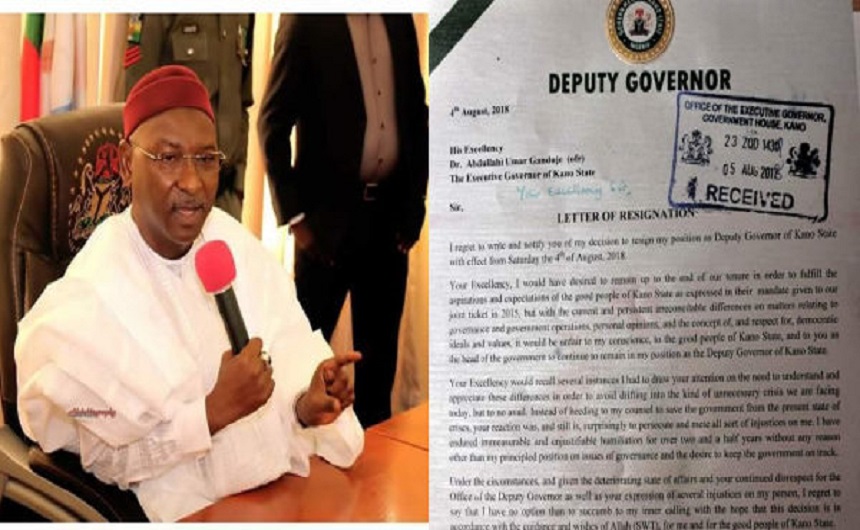
Chairman of the Nigerian Aviation Handling Company PLC (NAHCO Aviance), Mallam Suleiman Yahyah, has resigned from the board.
His letter of resignation has been communicated to the regulators.
Mr Yahyah cited the urgent need to attend to his failing health as the reason for his decision to bow out.
With the resignation of Mr Yahyah, the Vice Chairman, Mr Denis Hasdenteufel, would take over the leadership of the Board in an acting capacity and will preside over all meetings of the Board pending the approval of regulators and further announcements from stakeholders.
Mr Yahyah, who was appointed a director of the Company in November 2006, became the Chairman of NAHCO in July 2012.
He had in recent months come under mounting pressures from his family to step down to enable him undergo a proper medical attention.
Credited with the strategic reorganization of the company to its current modern status, Mr Yahyah had been battling with an undisclosed health issue for a couple of years now.
During his tenure, NAHCO witnessed unprecedented turnover which grew from N6.92 billion when he took over leadership of the board to N8.5 billion at Year End 2015.
This, we learnt, is in addition to increase in number of employees from about 1,100 to an all-time high of 1,980.
During this period, the company’s asset base also grew from N9 billion to N15 billion.
The hallmark of Mr Yahyah’s tenure at NAHCO was the modernization of company’s equipment to align with world’s standards in modern ground handling service.
He was credited with equipping NAHCO with state-of-the-art equipment that made the Company the great force that it is today in ground handling service in sub-Sahara Africa.
The diversification of the company which the board under his tenure embarked upon led to the establishment of NAHCO FTZ with the granting of a licence for same by the Federal Government. The Mainland Cargo Options also joined the growing list of companies in the group.
Mr Yahyah also promoted a harmonious company-labour relations which ensure minimal disruption in company’s business operations.
His welfare–oriented policies include the introduction of performance based pay (PMP) to employees and profit–sharing for workers.
He introduced a management succession programme into the Company that ensured a smooth transition from one CEO to another.
Under his leadership, NAHCO became the most successful privatisation story in the history of privatisation programme in Nigeria.





By Kestér Kenn Klomegâh
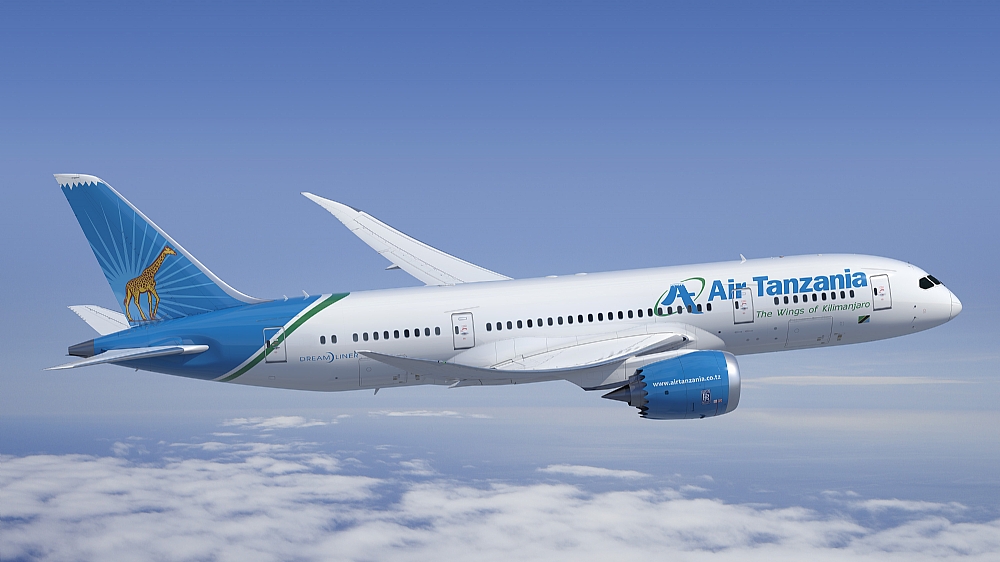
To significantly boost economic diplomacy, trade, and tourism between Tanzania and Russia, Air Tanzania will commence direct flights from Dar es Salaam and Zanzibar to Moscow, the capital of Russia, from July 2, 2026.
Early June, the President of Tanzania, Ms Samia Suluhu Hassan, and her delegation were in Moscow and St Petersburg’s SPIEF-2026, at the invitation of Russian leader Vladimir Putin. One of the dominant topics discussed by the two parties was tourism. This was a follow-up to earlier visits by Russian delegations to Tanzania on the matter.
The sides noted that the country is well-positioned to become a more attractive destination for Russian tourists. The Russian party also offered help in promoting Tanzanian tourist products on the Russian market, organising business meetings with Russian travel agents and presenting the tourist potential at Russia’s tourist forums.
The Russian Federal Air Transport Agency, Rosaviatsiya, sent an authorisation to Air Tanzania for making flights over the route of Dar es Salaam – Moscow. “Rosaviatsiya received an application from the Tanzanian national air carrier, Air Tanzania, to make flights on the route of Dar es Salaam – Moscow. The issue was promptly considered, and the authorisation for flights was already sent to the airline. Air Tanzania did not make flights to Russia before,” Russian Transport Minister Andrey Nikitin told Russian reporters.
Tanzania has been a popular tourist destination for Russian tourists for years, particularly Zanzibar. “Unfortunately, during the pandemic, the number fell sharply, and now we are trying to increase it again. But to increase the number of tourists, we need several factors to be in place. The most important thing to do to bring back the number of tourists to a high level is to establish direct flights from Russia to Tanzania,” Russian Ambassador to Tanzania, Andrey Avetisyan, explained in an interview with The Citizen newspaper.
The key operational and news details include:
Launch Date: Direct flights officially begin on July 2, 2026, marking a massive milestone for African-Eurasian travel.
Frequency: Air Tanzania will operate three weekly flights between Tanzania and Moscow (departing on Mondays, Wednesdays, and Fridays). The journey time will be 8 hours and 30 minutes.
The Route: From Moscow, the flights will operate from Vnukovo airport. Using the Boeing 787 Dreamliner aircraft, planes will fly between Dar es Salaam, Zanzibar, and Moscow, with initial discussions highlighting a strategic stop in the Seychelles for refuelling.
Tanzania has hit a record in terms of the number of foreign tourists. By facilitating this travel arrangement, Russia and Tanzania have taken a significant step forward in establishing connectivity with the Island, well-known for recreation. Welcomed by East African entrepreneurs, this policy initiative indicates broader efforts to promote a more interconnected and open Africa.
In 2024, the country accepted more than 1.5 million guests on its territory. According to tourism experts, the new development will likely go beyond the traditional recreation, to create grounds for expansion and diversification of its various types of tourism, including medical, sports and business tourism.
Zanzibar, off Tanzania’s coast, is one of East Africa’s most popular tourist destinations and attracts visitors from Europe and North America. In addition, Zanzibar is now attracting Russian tourists. “We look forward to the emerging tourism dynamics, future collaboration between the two countries,” says Tour Operator Karina Yefimova at the “Let’s Travel” forum in June 2026.
With an estimated population of 1.9 million people, Zanzibar is a Tanzanian archipelago off the coast of East Africa. It is located in the Indian Ocean, and consists of many small islands and two large ones: Unguja (the main island, referred to informally as Zanzibar) and Pemba Island.

By Adedapo Adesanya
The Airline Operators of Nigeria (AON) has denied owing cost recovery charges to the Nigeria Civil Aviation Authority (NCAA), insisting that all services rendered by the regulator to domestic airline operators are paid for fully in advance on a cash-before-service basis.
In a statement from the airlines’ body, it was emphasised that no domestic airline in Nigeria receives NCAA regulatory services without first making full payment of invoices issued to it by the agency, describing suggestions of the indebtedness for regulatory services as factually inaccurate.
It said that what the NCAA refers to as ‘outstanding charges’ relates solely to the 5 per cent Ticket Sales Charge (TSC), a tax imposed by the NCAA on passengers, which it said is not in consonance with the dictates of international aviation.
The AON then urged the federal government to urgently amend the Civil Aviation Act to empower the NCAA to collect whatever appropriate fees and charges are due it directly from passengers or whoever else, without routing such through the domestic airlines, from June 1, 2026.
It said doing this will relieve domestic airlines of the financial burden of acting as collection agents for the NCAA, since airlines currently bear banking transfer charges and other transaction costs in the process of transmitting funds to the organisation.
The airline body reiterated its position that the NCAA is a regulator, not a revenue-generating agency and that it does not fund any aspect of the airline businesses or render any direct service to passengers.
The AON said every service the agency provides to airline operators is fully paid for in advance before it is rendered.
“The AON notes that several member airlines maintain dedicated accounts, from which the NCAA draws down its monthly remittances, until the force majure caused by the Iran-Israel/USA conflict, which had put a lot of financial pressure on airlines worldwide.
“Notwithstanding this arrangement, the AON had formally appealed to the federal government through the office of the Minister of Aviation and Aerospace Development, to suspend the payment of all statutory charges temporarily, as an interim measure to assist airlines in managing their cash flows during the current period of severe financial stress caused by the increase in the cost of Jet A1.
“As an interim response, President Bola Tinubu graciously granted a 30 per cent concession while waiting for the government’s decision on the other aspects of the AON intervention request.
“While the AON acknowledges and appreciates this gesture, we had appealed for a meeting with Mr President to discuss further reliefs, a request that is yet to be granted,” the AON said.
Speaking further on reports that airlines owe billions in debt to the NCAA, the AON said the 5 per cent Ticket Service Charge in question was introduced over 45 years ago under the Government of General Gowon by the then Federal Civil Aviation Authority (FCAA) and its continued relevance has not been reviewed ever since.
It further stated that domestic airlines, in addition to the 5 per cent TSC, still pay separately ànd directly for services provided by the various industry agencies, including the NCAA itself.
AON said that the 5 per cent TSC is an ad valorem tax applied to an airline’s gross earnings, not profits and that the global aviation industry operates at a profit margin of between 1.5 per cent and 2.5 per cent at best.
“The AON remains committed to constructive engagement with the government and all stakeholders to achieve a growth-oriented sector, designed to enable the accelerated growth of key sectors of the economy and the improvement and sustenance of a healthy quality of life for the citizenry,” it said.
By Adedapo Adesanya
The Nigeria Civil Aviation Authority (NCAA) has announced the temporary suspension of its “no pay, no service” directive earlier issued to airlines with outstanding statutory remittances, citing ongoing consultations and prevailing operational challenges in the aviation sector.
In a statement, the authority said the decision followed a review of industry conditions, particularly the rising cost of aviation fuel, which has placed significant financial pressure on domestic carriers and threatens overall sector stability.
However, the NCAA stressed that the suspension does not amount to a waiver, cancellation, or forgiveness of the debts owed by the affected airlines, noting that such decisions fall outside its regulatory mandate.
The agency recalled that President Bola Tinubu had earlier approved a 30 per cent discount on outstanding statutory charges owed by domestic airlines to aviation agencies, as part of broader government efforts to cushion the impact of high Jet A1 fuel costs and stabilise the industry.
According to the NCAA, airlines remain fully responsible for settling their obligations, adding that it would engage operators individually to ensure compliance through structured repayment arrangements that do not disrupt operations.
The regulator also clarified the nature of the 5 per cent Ticket and Cargo Sales Charge, describing it as a statutory levy mandated by the Civil Aviation Act and embedded in the cost of air travel and cargo services.
It explained that the charge is collected by airlines at the point of ticket and cargo sales on behalf of the aviation system and must be remitted accordingly.
The organisation emphasised that the funds do not constitute revenue or profit for the airlines and should not be treated as such.
It further noted that the revenue from these charges is distributed among key aviation institutions, including the regulator itself and other service providers, all of which play vital roles in ensuring safe, efficient, and internationally compliant aviation operations.
It added that the NCAA operates on a cost-recovery basis and does not receive direct funding from the Federal Government for its routine regulatory activities, making timely remittance of statutory charges critical to sustaining its oversight functions.
The suspension of the enforcement directive, it said, is a measured step aimed at maintaining operational stability in the sector while reinforcing the obligation of airlines to remit collected charges.
The NCAA reaffirmed its commitment to balancing regulatory enforcement with industry sustainability, warning that statutory funds already collected must be remitted for their intended purposes.
-
 Feature/OPED6 years ago
Davos was Different this year
-
Travel/Tourism10 years ago
Lagos Seals Western Lodge Hotel In Ikorodu
-

 Showbiz3 years ago
Estranged Lover Releases Videos of Empress Njamah Bathing
-
 Banking8 years ago
Sort Codes of GTBank Branches in Nigeria
-

 Economy3 years ago
Subsidy Removal: CNG at N130 Per Litre Cheaper Than Petrol—IPMAN
-

 Banking3 years ago
Sort Codes of UBA Branches in Nigeria
-

 Banking3 years ago
First Bank Announces Planned Downtime
-

 Sports3 years ago
Highest Paid Nigerian Footballer – How Much Do Nigerian Footballers Earn