

General
Senate Probes FG’s Spending On North-east Crisis


By Ebitonye Akpodigha
The Senate on Tuesday set-up an adhoc committee to probe spendings by the Federal Government on the humanitarian crisis in the North-east in view of the allegation of massive diversion of relief materials meant for the Internally Displaced Persons (IDPs).
The Adhoc Committee chaired by Senator Shehu Sani from Kaduna State is also to hold a public hearing to unravel the funds already committed to ameliorating the plight of the IDPs, and how the fund is being expended by the agencies of government saddled with the responsibility. The Senators also resolved to donate N32.7million to be contributed by the 109 Senators in support of the IDPs in the area of welfare.
These and other resolutions of the Senate followed a motion titled “Mounting Humanitarian Crisis in the North-East sponsored by Senator Baba Kaka Bashir Garbai (Borno Central) and co-sponsored by 18 other senators.
Senator Garbai in his lead debate urged the Senate to note with grave concern the unfolding humanitarian crisis in the North Eastern part of the country which has continued to be of concern to the international community and the media.
He noted that according to UNICEF report, about 4.5million people are in dire need of assistance, while one million of the number were in danger of extreme malnutrition.
He lamented that about two million people are beyond the reach of aid and presently at the risk of starvation, thereby making Western diplomats to describe the response of the Federal Government to the crisis as a “disgrace.”
He urged his colleagues to note the disturbing development on the prevailing degrading condition in the various IDP camps, and added that “already we are losing so many of our children under five years to this extreme conditions in the affected areas.”
He stated that in spite of the earlier resolution of the Senate that raised the budget for the IDPs from N6billion to N10billion in recognition of the dire situation in the North East, the Presidential Initiative on the North East is yet to show tangible result on ground with half of the appropriated sum released.
“…Notwithstanding the huge budgetary allocation by the National Assembly, and the various releases by the executive…including significant donations from many donors, the situation on ground is not cheering,” he said.
He further called on the Red Chamber to be “worried that rather than use the money appropriated for the IDPs and the North East to ameliorate the problems, the focus of the disbursement so far made have been used to feather other interests.”
The Senator insisted that the “incoherent and largely fragmented state of procurement in the usage of the released funds so far points to a vague and corrupt scheme that is not in tune with helping our people in the North East out of their present harrowing experience and misery.”
He added: “the government has made concerted efforts at ameliorating the sufferings of the IDPs, some other people are working towards undermining same efforts; there are some allegations of diversion of 63 trucks of grains released from the strategic grain reserve allocated to IDPs in Borno State by the Federal Government.
“The gap in the state of affairs, where so much money has been made available by government with very little to show for it, has created and overburdened the cash strapped states and local governments in the affected states. Also, the intensity of the crisis was exemplified in August when IDPs took to the streets to obstruct vehicular movement and grounding business activities along the Maiduguri- Kano/Jos Road – the major road leading into Borno, to protest what they claimed was a shortage of food”, he stated.
Other Senators in their contributions to the debate on the motion, decried the pitiable plight of the IDPs and urged the Senate to stand up for the suffering, displaced persons.
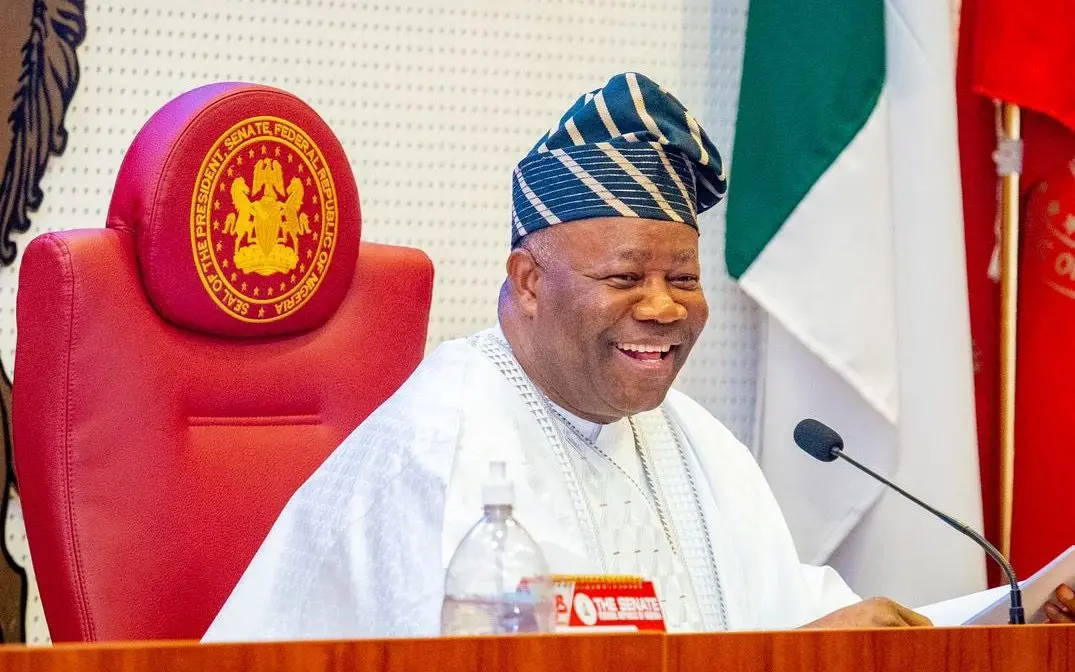
Senate President, Mr Bukola Saraki, in his remarks, lauded the sponsors of the motion and those who made contributions during its debate. He described the revelations emanating from the handling of the humanitarian crisis as serious and portraying poor coordination, lack of transparency and slow response among those entrusted with the care of the IDPs.
“As a serious chamber, we cannot fold our arms and let these things continue to happen. This investigation, I believe, will give hope to the IDPs and the international community that the country is ready to do something to stop the diversion of aids and misapplication of appropriated funds meant for the upkeep of the IDPs,” Mr Saraki said.
Related articles across the web









By Adedapo Adesanya
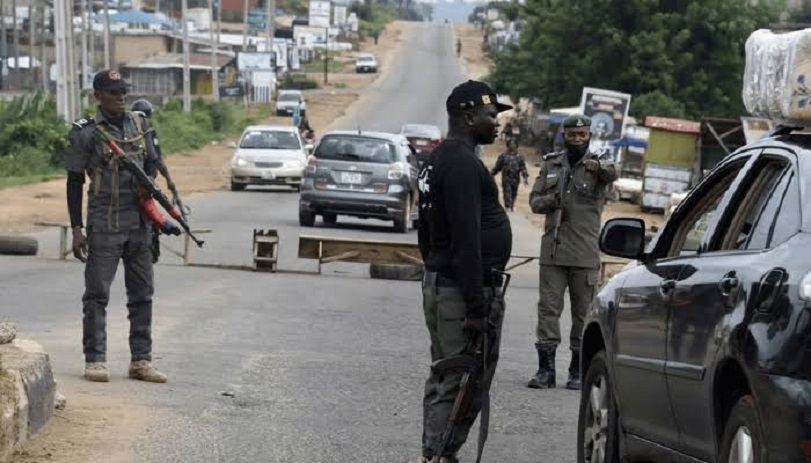
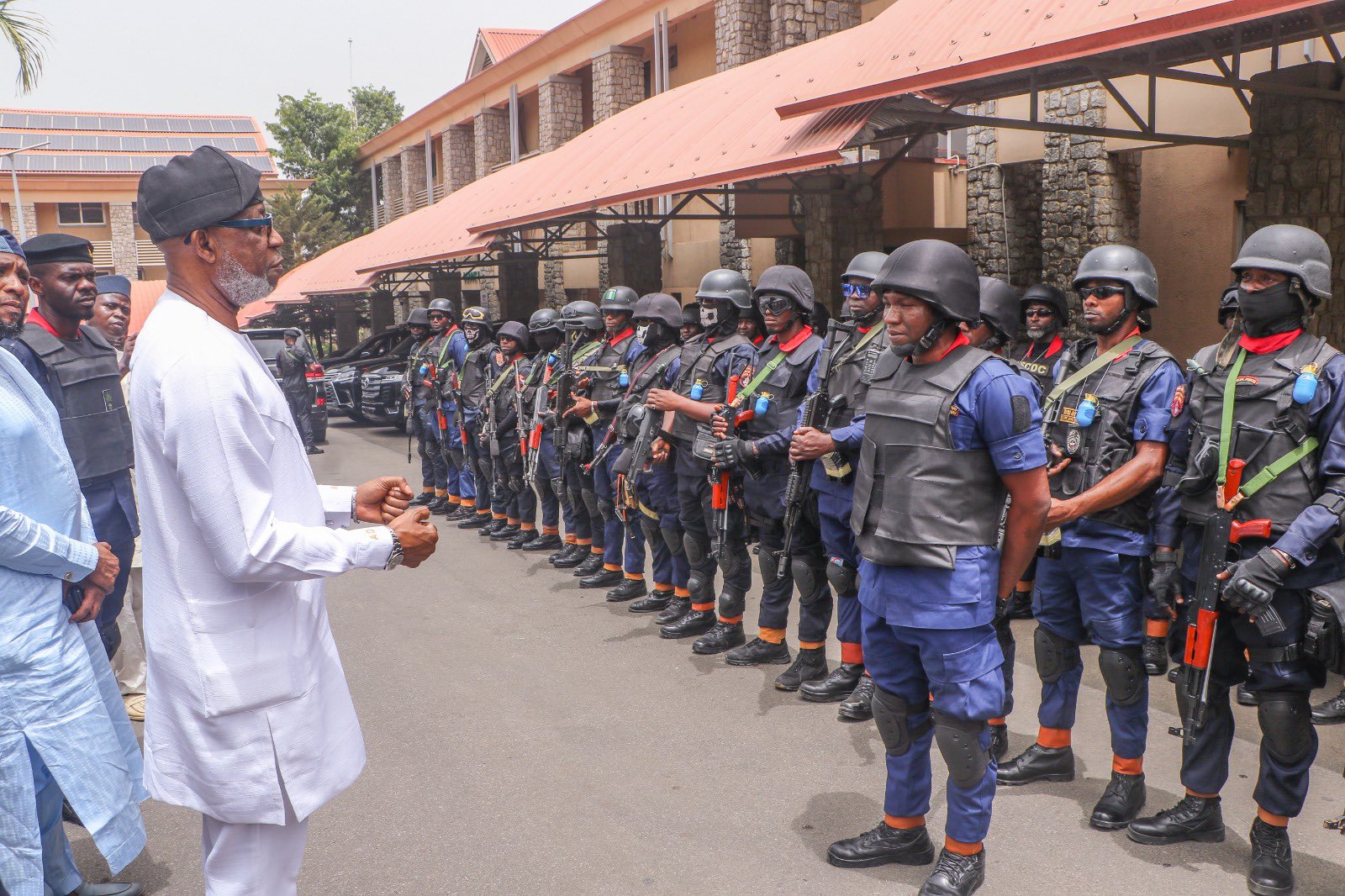
Over 90 illegal mining sites have been reclaimed and 300 offenders prosecuted since the deployment of the Mining Marshals, a specialised task force established to secure Nigeria’s mineral assets.
This information was disclosed by the Minister of Solid Minerals Development, Mr Dele Alake, at the South West Leaders Conference held recently in Akure, the Ondo state capital.
He described the crackdown as a turning point in the battle against mineral theft and insecurity in mining communities.
“We created the Mining Marshals to tackle insecurity and illegal mining head-on. I’m proud to say that peace is returning to our mining fields,” he said.
According to Mr Alake, the initiative has strengthened investor confidence and improved government revenue.
“When you protect the minerals, you protect national wealth. That’s exactly what we’ve done with the Mining Marshals,” he stated.
He noted that beyond arrests and reclamations, the Marshals have restored safety in key mining corridors and curbed the activities of illegal foreign operators. “We are taking back control of our natural resources from criminal networks,” Mr Alake emphasised.
The minister reiterated the government’s commitment to maintaining the momentum through digital surveillance, stronger local intelligence, and inter-agency coordination.
“Our success proves that security is the bedrock of sustainable mining. We will keep refining this model until every site in Nigeria is safe, legal, and productive,” he added.
Launched last year, the marshals were given the mandate to stem theft and all nefarious activities around the nation’s minerals so that benefits are not extracted by the wrong people.

By Aduragbemi Omiyale
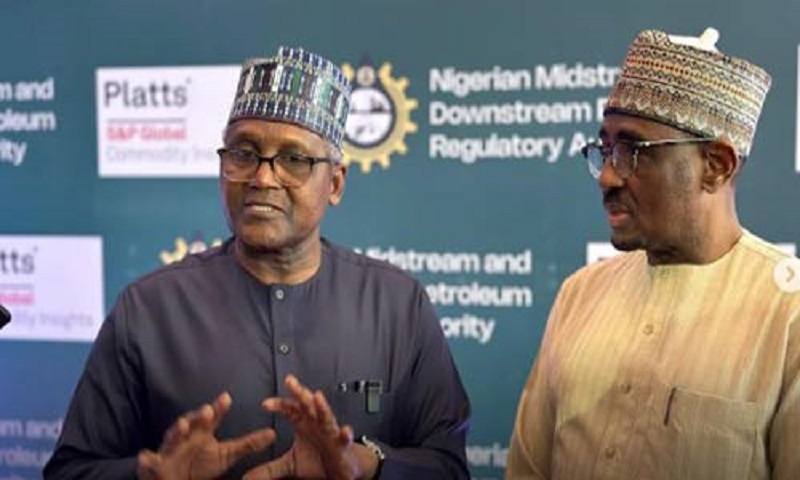
A petition has been filed against the chief executive of the Nigerian Midstream and Downstream Petroleum Regulatory Authority (NMDPRA), Mr Ahmed Farouk.
The petition was written by the president of the Dangote Group, Mr Aliko Dangote, to the Independent Corrupt Practices and Other Related Offences Commission (ICPC).
Mr Dangote asked the agency to look into the finances of the head of the petroleum industry regulator, alleging the man is living far above his legitimate means as a public officer.
In the protest letter filed by his legal counsel, Mr Ogwu Onoja (SAN), the businessman claimed the NMDPRA chief spent over $7 million to educate his children, four in number, in Switzerland.
The petition, dated and submitted on Tuesday, December 16, 2025, and received by the office of the ICPC Chairman, also claimed that Mr Ahmed paid upfront for a six-month period, without any lawful source of income to justify such expenditure.
It also alleged that NMDPRA boss used his office to siphon and divert public funds for personal gain and private interests, actions which he claimed had fuelled public outrage and recent protests by various groups.
“That Engr Farouk Ahmed has grossly abused his office contrary to the extant provisions of the Code of Conduct for Public Officers and, in doing enmeshed himself in monumental corruption and unlawful spending of Public funds running into millions of dollars.
“That Engr Farouk Ahmed spent without evidence of lawful means of income humongous amount of money of over 7million dollars of Public funds, for the education of his four children in different schools in Switzerland for a period of six years upfront,” a part of the petition read.
“It is without doubt that the above facts in relation to abuse of office, breach of the Code of Conduct for public officers, corrupt enrichment and embezzlement are gross acts of corrupt practices for which your Commission is statutorily empowered under Section 19 of the ICPC Act to investigate and prosecute,” another part added.
“Any public officer who uses his office or position to gratify or confer any corrupt or unfair advantage upon himself or any relation or associate of the public officer or any other public officer shall be guilty of an offence and shall on conviction be liable to imprisonment for five (5) years without option of fine,” it reminded the ICPC, urging it to act decisively by investigating the allegations against Mr Ahmed and prosecuting him if found culpable, stressing that the matter is already in the public domain, as this would help uphold justice and protect the image of the administration of President Bola Tinubu.
Mr Dangote promised to provide evidence to substantiate his allegations of corrupt enrichment, abuse of office and impunity against the NMDPRA chief when required.
By Adedapo Adesanya
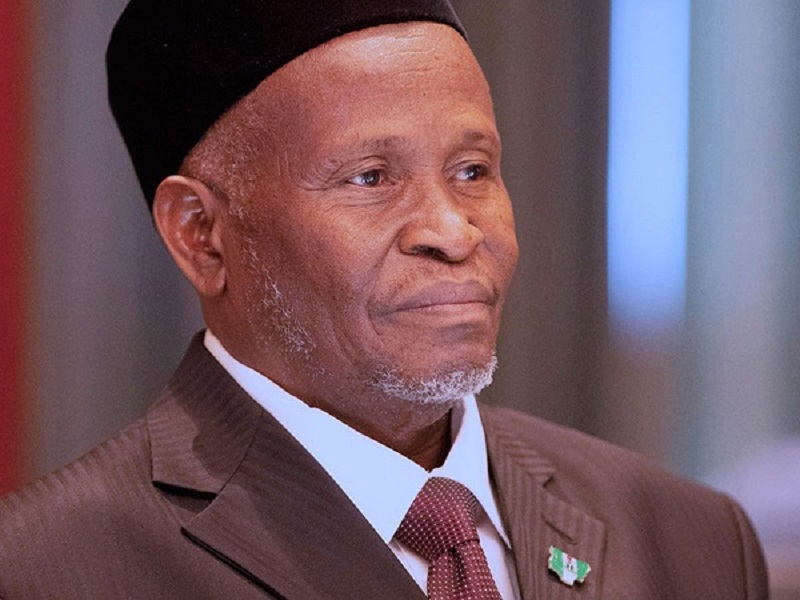
A former Chief Justice of Nigeria (CJN), Justice Ibrahim Tanko Muhammad, has died at the age of 71.
Justice Muhammad reportedly passed away at a hospital in Saudi Arabia, about two weeks before his 72nd birthday, which would have fallen on December 31.
His death was confirmed on Tuesday in Abuja by the Bauchi State Governor, Mr Bala Mohammed, in a condolence message issued on Tuesday by his Special Adviser on Media and Publicity, Mr Mukhtar Gidado.
Governor Mohammed noted that Justice Muhammad was a distinguished son of Bauchi State whose life and career were marked by dedication, integrity, and an unwavering commitment to the rule of law.
“The late jurist was a venerable and accomplished legal icon who rose through the ranks of the judiciary with diligence and distinction, serving as a Judge of the High Court, Justice of the Court of Appeal, Justice of the Supreme Court, and ultimately as Chief Justice of Nigeria from 2019 to 2022,” he said.
According to the governor, Justice Muhammad was widely respected for his legal acumen, discipline, and immense contributions to the growth and development of Nigeria’s judicial system.
He added that the conferment of the national honour of Grand Commander of the Order of the Niger (GCON) on the late jurist was a testament to his outstanding service to the nation.
Mr Mohammed extended heartfelt condolences to the family of the deceased, his friends, colleagues in the legal profession, and the people of Bauchi State and Nigeria as a whole.
Also, the Nigerian Association of Muslim Law Students (NAMLAS) lauded the former jurist in its condolence message.
In the statement titled NAMLAS Condolence Message on the Passing of Hon. Justice Ibrahim Tanko Muhammad, GCON, Former Chief Justice of Nigeria, the association described his death as a monumental loss to the Nigerian judiciary and the nation.
“The Nigerian Association of Muslim Law Students receives with profound sorrow the news of the passing of Justice Ibrahim Tanko Muhammad, GCON, former Chief Justice of Nigeria. His demise is a monumental loss to the Nigerian judiciary, the legal profession, the Muslim Ummah, and the nation at large.”
NAMLAS described the late jurist as a towering figure of integrity, humility and unwavering commitment to justice, noting that throughout his judicial career, he exemplified fairness, courage and fidelity to the rule of law.
The association said that as Chief Justice of Nigeria, Muhammad discharged his responsibilities with wisdom and restraint, leaving behind a legacy that would continue to guide generations of legal practitioners.
Beyond his judicial service, NAMLAS highlighted his role as a mentor to young Muslim law students across the country, describing him as a fatherly figure and a source of encouragement.
“To NAMLAS, the late Chief Justice was more than a jurist; he was a fatherly pillar and a source of encouragement to Muslim law students nationwide,” the statement said.
The association extended its condolences to the family of the deceased, the Nigerian judiciary, the Federal Government and the Muslim Ummah, while praying for the repose of his soul.
Justice Ibrahim Tanko Muhammad served as Chief Justice of Nigeria from 2019 until his retirement in 2022.






-
 Feature/OPED6 years ago
Davos was Different this year
-
Travel/Tourism9 years ago
Lagos Seals Western Lodge Hotel In Ikorodu
-

 Showbiz3 years ago
Estranged Lover Releases Videos of Empress Njamah Bathing
-
 Banking7 years ago
Sort Codes of GTBank Branches in Nigeria
-

 Economy3 years ago
Subsidy Removal: CNG at N130 Per Litre Cheaper Than Petrol—IPMAN
-

 Banking3 years ago
First Bank Announces Planned Downtime
-

 Banking3 years ago
Sort Codes of UBA Branches in Nigeria
-

 Sports3 years ago
Highest Paid Nigerian Footballer – How Much Do Nigerian Footballers Earn